

Who Helped Draw Up The Virginia Plan?
Ecology: lesson ideas

Nature and our environment existence one of the greatest treasures for humanity are daily destroyed by human beings. While lots of people do care for nature and try to solve ecological bug, others do non know even how to handle it. Ecological problems need urgent and minute observation. Every person has their ain attitude on this consequence. If you lot want to discuss this topic with your Intermediate students, here are some lesson ideas.
Job 1: Warm-upwardly
— What does it hateful to be eco-friendly?
— Match the activities with the pictures. Choose the activities which yous retrieve are eco-friendly.
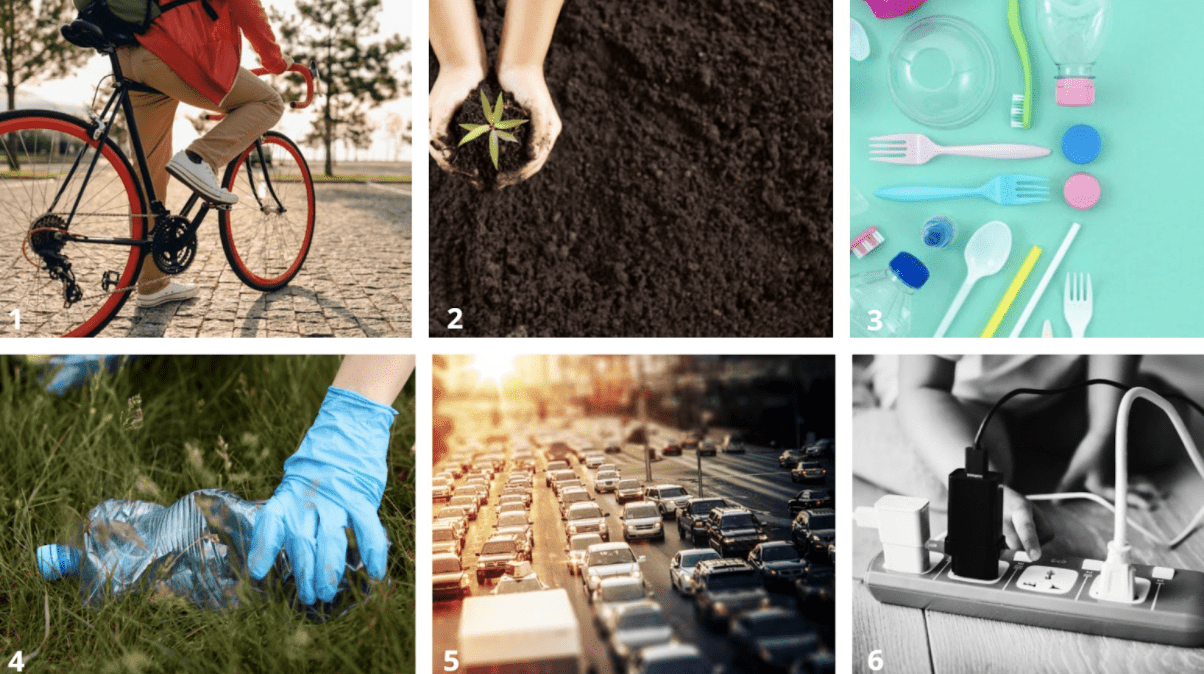
- Using plastic
- Driving a car
- Riding a wheel
- Leaving appliances plugged in
- Planting a tree
- Cleaning up the environment
iii) Why have yous chosen these activities?
4) Why do you lot think the rest of the activities are non eco-friendly?
Keys:
1 — c
2 — eastward
3 — c
4 — f
v — b
six — d
Task 2: Lead-in
Hash out the questions:
- Do you intendance about our environment? Tin you call yourself eco-friendly? Why?
- Which countries do you think are the leaders in caring almost our environs?
- Exercise you lot donate money or actively campaign for environmental causes?
- If the surround could speak, what would it tell us?
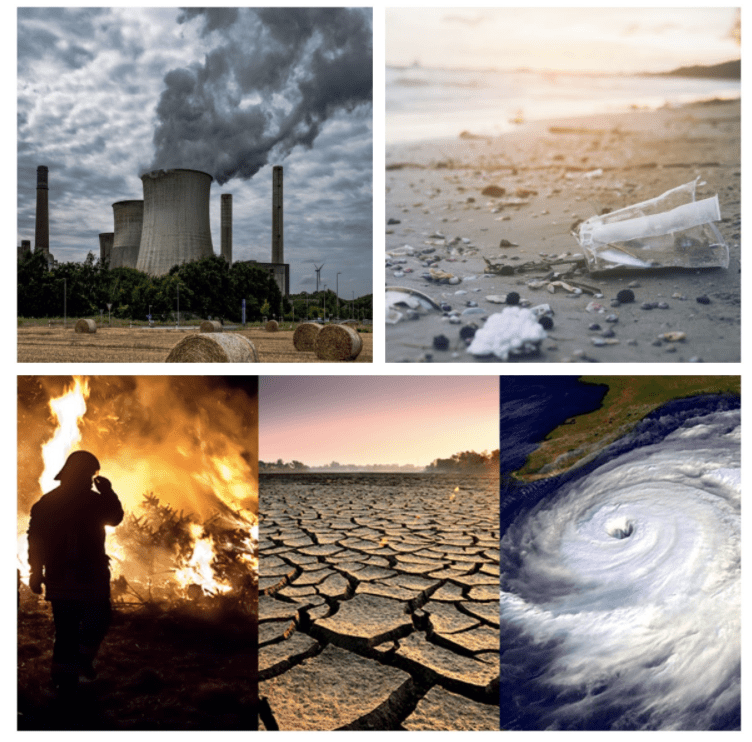
- What are the biggest problems our environs is facing?
Task three
At present let'south sentinel the video about plastic pollution.
Put the events in the mentioned order.
- Bottle one ends upwards in a landfill. As plastics sit there amid layers of other junk, rainwater flows through the waste product and absorbs the water-soluble compounds it contains.
- Bottles are filled with liquid, wrapped, shipped, bought, opened, consumed and discarded.
- Bottle two, subsequently months lost at bounding main, is slowly drawn into a identify known as the Keen Pacific Garbage Patch. Here some animals get entangled in the mess. They mistake the coloured plastic bits for nutrient.
- Some of these compounds are highly toxic. Together they create leachate, which can move into groundwater, soil and streams poisoning ecosystems and harming wildlife.
- Nigh plastics don't biodegrade which means they are destined to break down into smaller pieces rotating in the sea eternally.
- Bottle three is brought into a found where it is squeezed apartment and compressed into a block. The blocks are shredded into tiny pieces which are washed and melted so they become raw materials that can be used once again.
- Plastic makes animals feel total when they are not so they starve to death.
- Bottle iii is at present set to be reborn every bit something completely new.
Keys:
B, A, D, C, One thousand, E, F, H
Task 4
Read the sentences and cull the appropriate meanings of the words in assuming.
- Bottles are filled with liquid, wrapped, shipped, bought, opened, consumed and discard ed . (to collect/to throw away /to apply)
- Bottle one end s upwards in a landfill. Equally plastics sit there amongst layers of other junk, rainwater flows through the waste and absorbs the h2o-soluble compounds it contains. ( to discover yourself in a place or situation that you did not intend or expect to be in/to observe a solution/to follow)
- Bottle ii, after months lost at ocean, is slowly drawn into a place known equally the Neat Pacific Garbage Patch. Here some animals get entangled in the mess. They fault the coloured plastic bits for food. (go lost/get twisted / disappear)
- Plastic makes animals experience full when they are not so they starve to death. (to get a niggling hungry/to be killed/ to dice from lack of food)
- Nearly plastics don't biodegrade which ways they are destined to pause downwards into (to drop/to separate into/to become smaller) smaller pieces rotating (fall apart/throw away/movement in a circumvolve) in the sea eternally.
- Canteen three is brought into a establish where it is squeezed apartment and compressed into a cake. The blocks are shredded into (to cut sth into small pieces/to cook/to destroy) tiny pieces which are washed and melted so they get raw materials that tin be used again.
Keys:
— to throw away
— to detect yourself in a place or situation that you did not intend or expect to exist in
— to go twisted
— to die from lack of nutrient
— to separate into, to move in a circle
— to cut sth into small-scale pieces
Job v
Picket the video again and answer the questions using new words (discard , finish up , go entangled, starve to death, break down into, rotate, shred into).
- How are the bottles made?
- Where does bottle one stop up?
- What danger does leachate bring?
- How is bottle 2 drawn into the Great Pacific Garbage Patch?
- What happens to the animals in the Great Pacific Garbage Patch?
- What is the destiny of bottle iii?
Keys:
— The plastic was formed by chemically bonding oil and gas molecules together. Then the plastic is melted in manufacturing plants and reformed in bottles. So they are filled with liquid, wrapped, shipped, bought, opened, consumed and discarded.
— Canteen one end s upwards in a landfill. Every bit plastics sit down there among layers of other junk, rainwater flows through the waste matter and absorbs the water-soluble compounds it contains.
— It can move into groundwater, soil and streams poisoning ecosystems and harming wildlife.
— Bottle 2, after months lost at sea, is slowly drawn into a place known as the Great Pacific Garbage Patch.
— Here some animals get entangled in the mess. They mistake the coloured plastic $.25 for food. Plastic makes animals feel full when they are not so they starve to death.
— Bottle three is brought into a institute where it is squeezed flat and compressed into a block. The blocks are shredded into tiny pieces which are washed and melted so they become raw materials that can be used over again. Bottle 3 is at present ready to exist reborn equally something completely new.
Chore half dozen
Tick the best solutions to the problems. Explain your option.
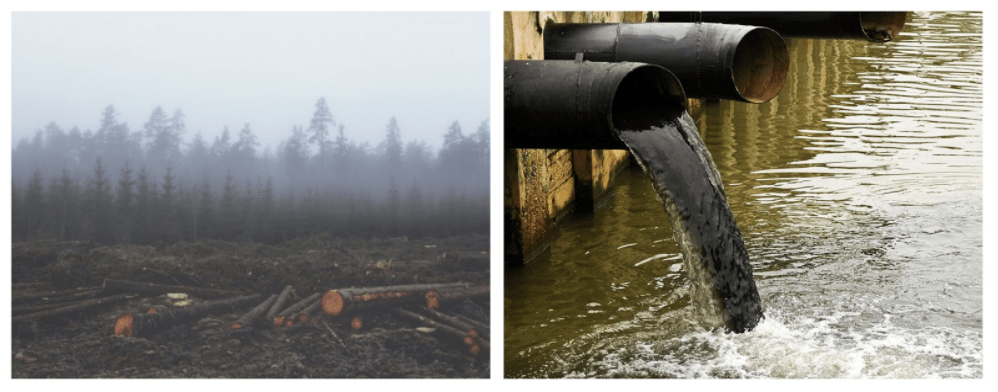
- Deforestation:
— Join a library instead of buying books.
— Print as little every bit possible.
— Stop using paper towels.
— Turn the sink water off when brushing your teeth.
— Accept shorter showers.
- B) Air pollution:
— Switch off anything that uses electricity when not in use.
— Drive less, utilize a bike instead.
— Choose public transportation.
— Purchase local food.
- C) Plastic rubbish:
— Bring your ain bags to the supermarket.
— Conduct your own reusable cup or h2o bottle.
— Effort to use as little packaging as possible.
— Wrap gifts in fabric.
Task vii:
Discuss the questions in pairs.
- Do y'all think cars should be banned from city centres? Why?
- How do you think COVID has impacted the ecology?
- Exercise you concord that since the borders were mainly closed in 2022, there are fewer ecological problems and the environment has somehow recovered? Explain your respond.
- What are the master ecological challenges your country is facing? What measures does your regime take to solve the issues?
- How practise wars influence our environment? What are the most important things countries must practice afterward wars to recover the environs?
Hopefully, the lesson ideas introduced in the article will turn out to be useful for your classes and your students will bask a cracking deal.


Source: https://skyteach.ru/2020/11/21/ecology-lesson-ideas/
Posted by: werneralwyet.blogspot.com
0 Response to "Who Helped Draw Up The Virginia Plan?"
Post a Comment